Guide
How to Make an AI Short Drama
The fastest way to learn how to make an AI short drama is to take one apart. SNOWBALL is a one-minute live-action short: a snowball fight in a stone courtyard where every snowball she throws at him turns into a pink heart. We made it in Renoise with one skill, Character Short Film, in five steps. Below is every prompt we used, in order. Swap in your own characters and the same prompts make your episode.
Start with the Character Short Film skill
SNOWBALL was made with the Character Short Film skill in Renoise. Its brief is one line: "Make a cinematic short film with my characters, with music and subtitles." Open the skill, upload your character images, and in each prompt below replace the @Her and @Him references with your own images. Then press Recreate on each step.
Keep the prompts in English, as we did. The models follow English prompts most closely, and the dialogue stays word for word because every prompt says so.
Step 1: Make a live-action character sheet for each lead
Everything that follows depends on this step. A video model starts every generation from scratch, so the only way to keep the same face in shot 1 and shot 12 is to hand it the same picture every time. A character sheet is that picture: one person from the front, the back and the side, a grid of expressions and close-ups of everything that has to stay identical (the eyes, the earrings, the tie, the shoes).
For SNOWBALL each sheet started from a drawing of the character. The prompt translates the drawing into a real actor photographed for a costume test, keeping the layout of the original sheet.
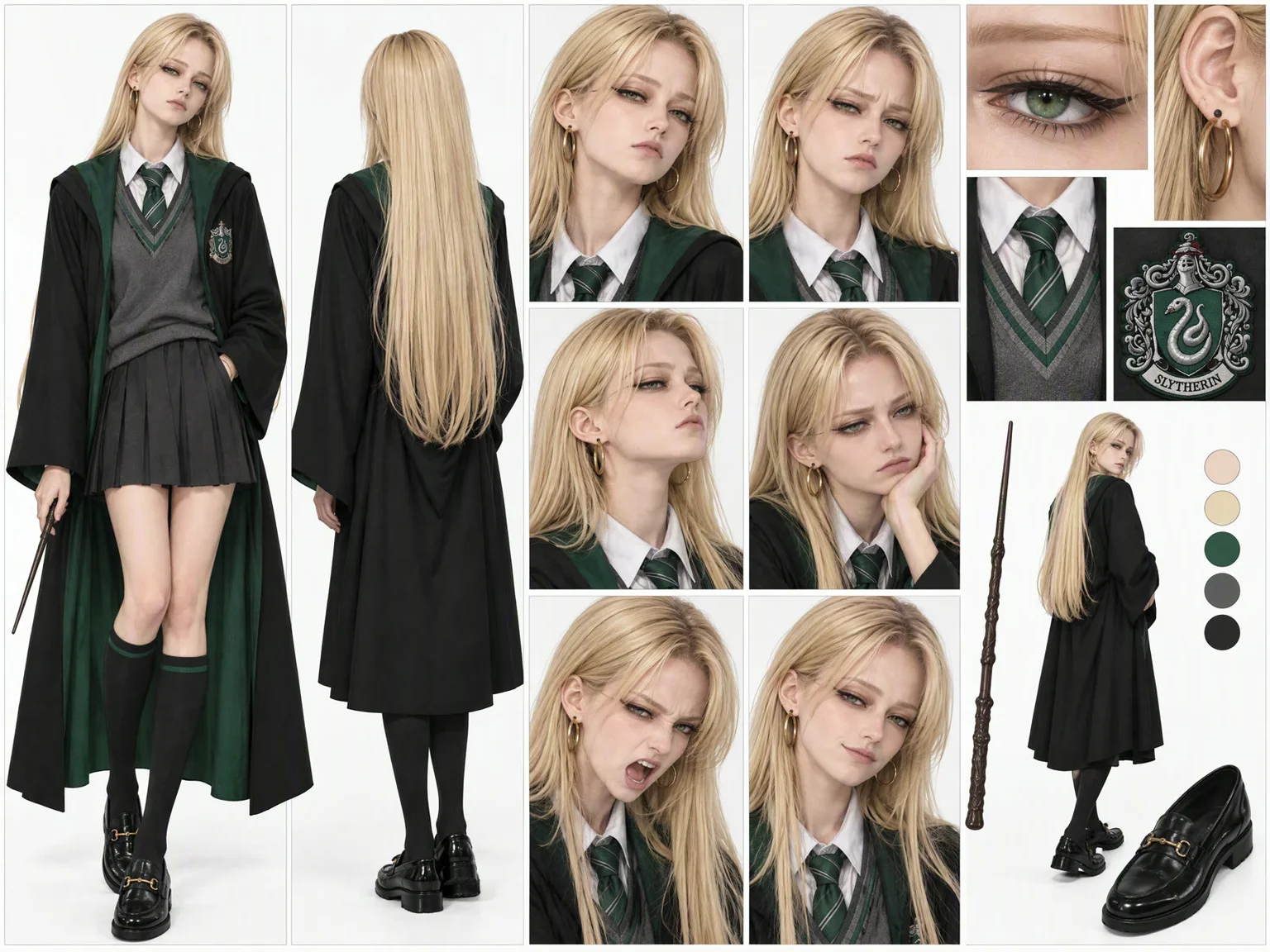
Her character sheet prompt:
USE: Live-action film character reference sheet / costume & casting asset board for a Harry Potter fan short film.

REFERENCE: @anime_sheet is an anime character design sheet. Translate this exact character, outfit and sheet layout into a photorealistic live-action version, as if a real actress was cast, costumed and photographed in a studio for a film production bible.

SUBJECT: A young adult woman, about 20 years old, slim build, pale fair skin with natural skin texture and subtle freckles-free complexion. Very long straight platinum-honey blonde hair reaching past the waist, center-left parting, face-framing side strands, no bangs. Striking light green eyes with sharp dark winged eyeliner, slightly heavy-lidded, aloof and bored expression, thin defined brows. Thin gold hoop earrings plus a small dark stud in each ear.

COSTUME (keep exactly): Slytherin school uniform: long black wool robe with hood and emerald-green lining, embroidered Slytherin crest patch on the left chest; charcoal-grey V-neck knit sweater vest with green and silver stripe trim at the neckline; white collared shirt; green-and-silver diagonal striped tie; dark charcoal pleated skirt; black knee-high socks with a thin green band at the top; glossy black horsebit loafers with gold hardware. Dark wooden wand with a knotted handle.

LAYOUT (mirror the reference sheet, clean white studio background, thin panel borders):
- Left: full-body front view standing, one hand in robe pocket, wand held low in the other hand.
- Next to it: full-body back view showing the long hair over the robe.
- Center grid of 8 head-and-shoulder portraits, same actress, same lighting: neutral-aloof, annoyed frown, chin-up proud side profile, bored with cheek resting on hand, disgusted sneer, mouth open shouting in irritation, smug half-smile, slightly sad downcast look.
- Right column detail close-ups: green eye with winged eyeliner; ear with gold hoop earring; tie and sweater vest neckline; embroidered Slytherin crest patch with the word "SLYTHERIN" on its banner; the wand on its own; a single horsebit loafer; small three-quarter rear full-body view looking back over the shoulder.
- Color swatch dots: fair skin, platinum blonde, emerald green, mid grey, charcoal black.

PHOTOGRAPHY: Real photography, cinematic costume test look, soft even key light with gentle fill, 85mm lens for portraits, true-to-life fabric textures (wool robe weave, knit sweater, silk tie), natural hair strands, consistent face across every panel.

PRESERVE: hairstyle, hair length and color, eye color, eyeliner, earrings, every costume piece and color, the panel layout of the reference.
AVOID: anime or illustration style, cartoon proportions, oversized eyes, plastic skin, extra fingers, watermark, any added text besides "SLYTHERIN".
The second sheet does one more thing: it uses her finished sheet as a layout and lighting reference, so both leads look as if they were shot on the same day, and says outright not to copy her face.
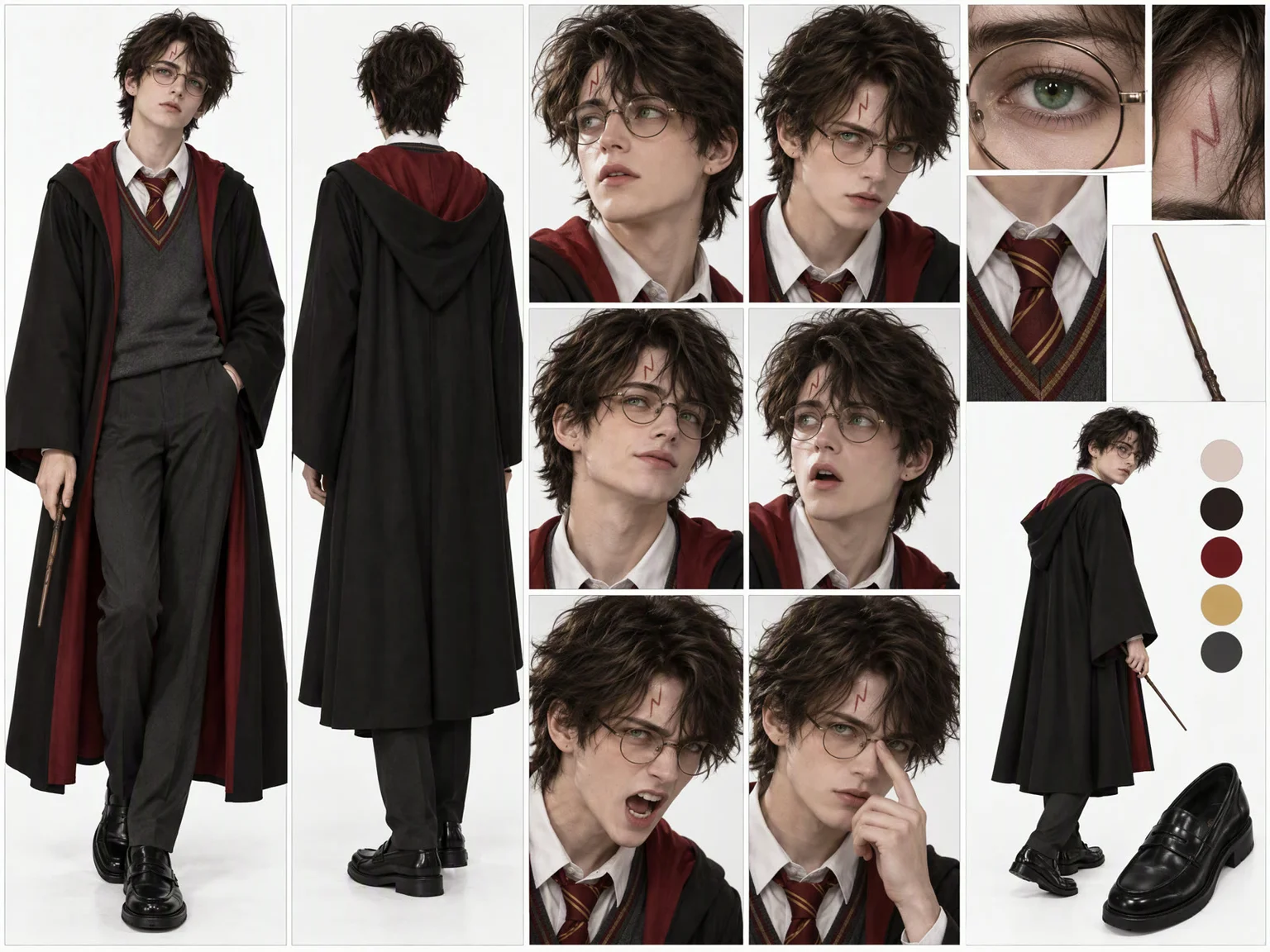
His character sheet prompt:
USE: Live-action film character reference sheet / costume & casting asset board for a fan short film.

REFERENCES:
- @illustration: illustrated portrait of the character. Translate THIS character into a photorealistic live-action actor: keep his face shape, features, hairstyle, expression and costume from this illustration.
- @her_sheet: existing live-action asset sheet for another character in the same film. Use it ONLY for panel layout, white studio background, lighting, color grading and level of realism. Do not copy her face, hair or costume.

SUBJECT: A young adult man, about 20 years old, as in @illustration: slim face, soft jaw, fair skin with natural texture. Thick, messy dark brown-black hair, tousled and layered, falling over the forehead and ears. Vivid green eyes, thin round gold wire-rimmed glasses. A thin red lightning-shaped scar on the forehead under the fringe. Gentle, slightly melancholic, alert expression.

COSTUME: long black wool robe with deep scarlet-red lining, white collared shirt, scarlet tie with thin gold diagonal stripes, charcoal grey V-neck knit sweater, charcoal trousers, black leather school shoes. A simple light-brown wooden wand.

LAYOUT (same structure as @her_sheet, clean white background, thin panel borders):
- Left: full-body front view standing, one hand in robe pocket, wand held low.
- Next: full-body back view.
- Center grid of 6 head-and-shoulder portraits, same actor: looking aside as in the illustration, determined frown, small smile, surprised, angry shouting, pushing glasses up with one finger.
- Right column close-ups: green eye behind round glasses; forehead with the scar; tie and collar; the wand; one shoe; three-quarter rear full-body view looking back.
- Color swatch dots: fair skin, dark brown-black, scarlet, gold, charcoal.

PHOTOGRAPHY: real photography, cinematic costume test, soft even key light, 85mm lens for portraits, natural hair strands and fabric textures, consistent face across every panel.

AVOID: resemblance to any real person, illustration or anime look, plastic skin, extra fingers, watermark, any text.
What to copy from these two prompts, whatever your characters look like:
- List every costume piece with its colour and material. "Black wool robe with emerald-green lining" survives ten shots; "school uniform" does not.
- Put the details that drift on the sheet as close-ups. Earrings, glasses and shoes are the first things a video model forgets.
- Say what to preserve and what to avoid. The PRESERVE and AVOID lines do as much work as the description.
No drawing to start from? Describe the character in words with the same SUBJECT, COSTUME and LAYOUT blocks. Our AI character consistency guide covers reference sets in more depth.
Step 2: Pick the story
The whole film was briefed in one sentence: "Make a one-minute short with my characters. A snowball fight where every snowball she throws at him turns into a pink heart." Then five beats, each with its line of dialogue written out:
- She boasts: "Nobody escapes my aim."
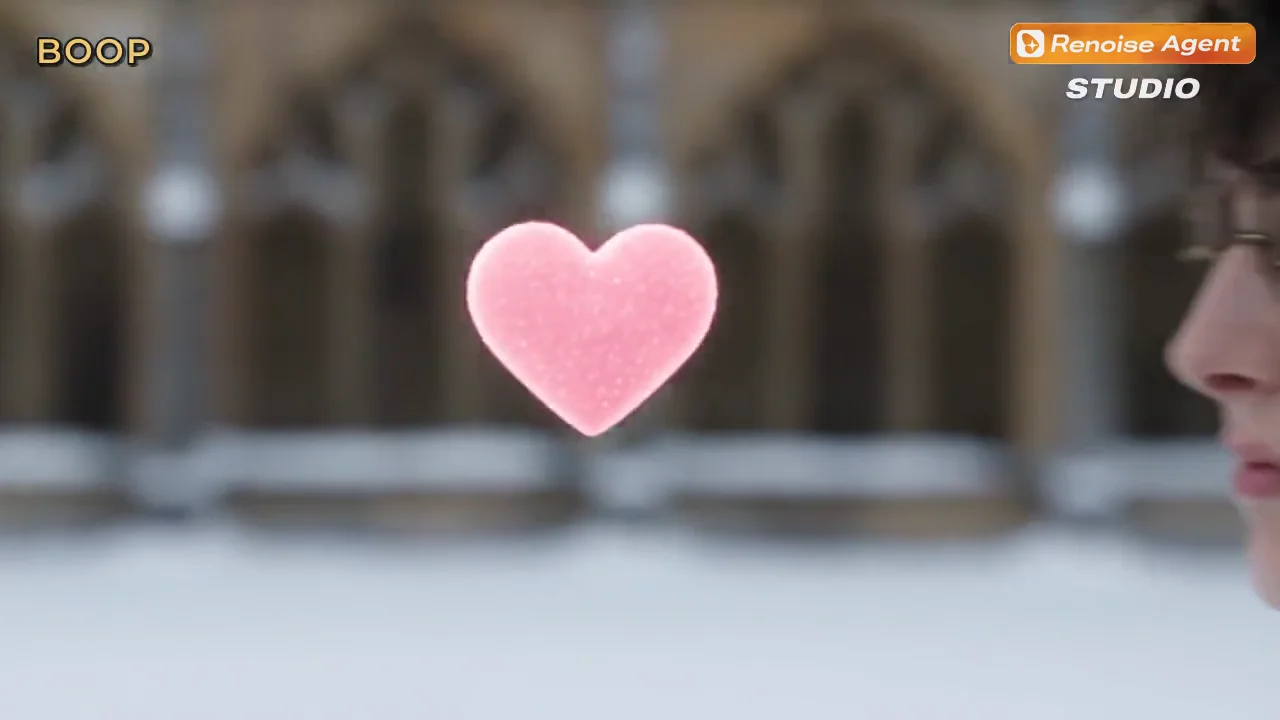
- Her snowball curves mid-air, turns into a pink heart and bursts in front of him.
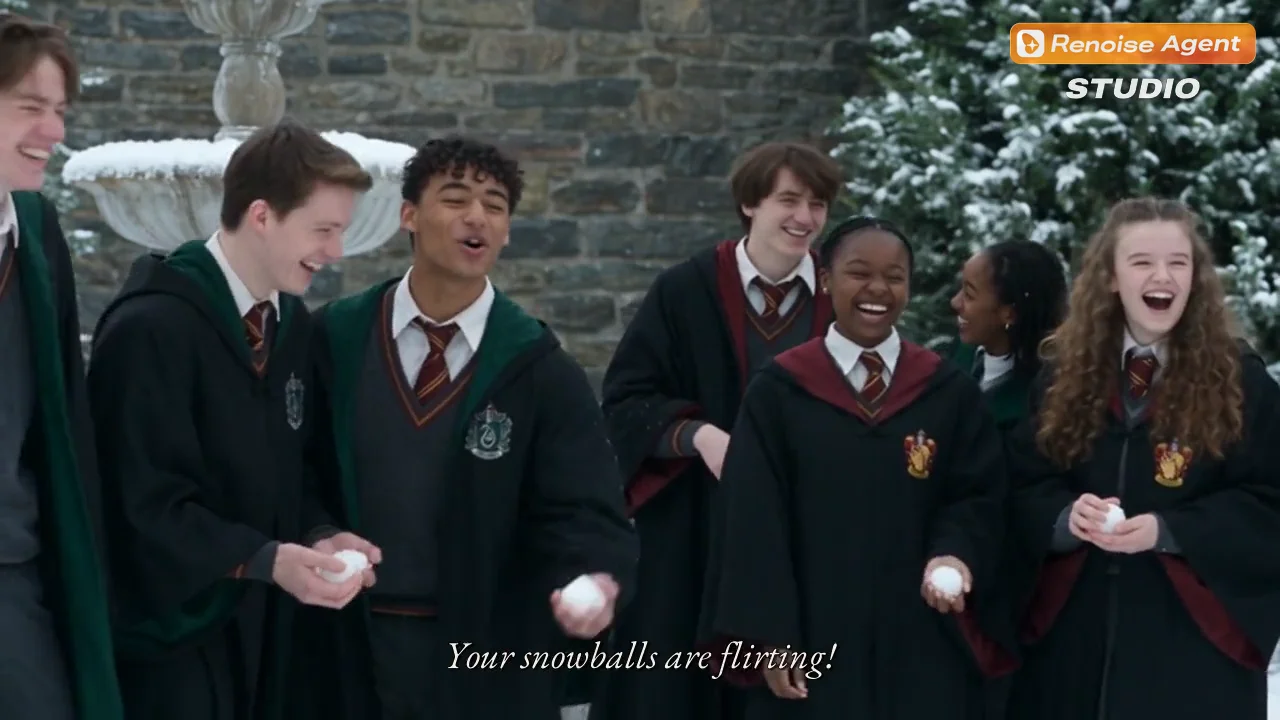
- A classmate shouts: "Your snowballs are flirting!"
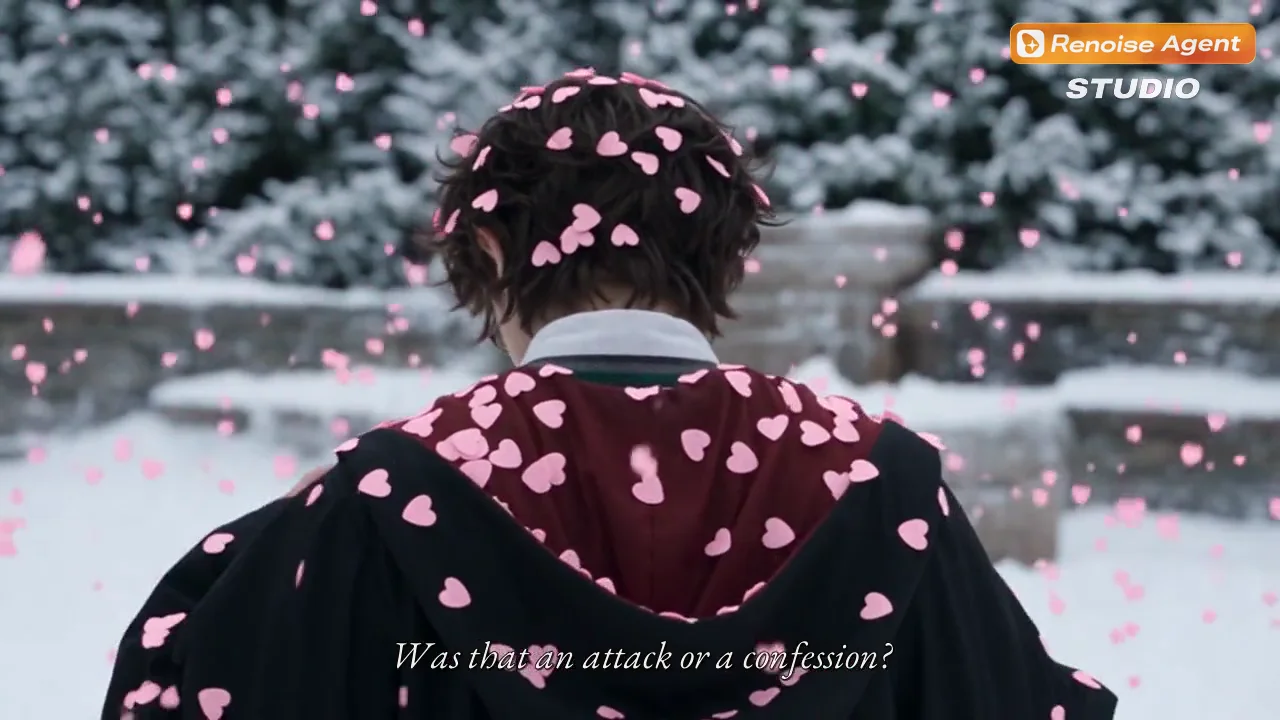
- He asks: "Was that an attack or a confession?"
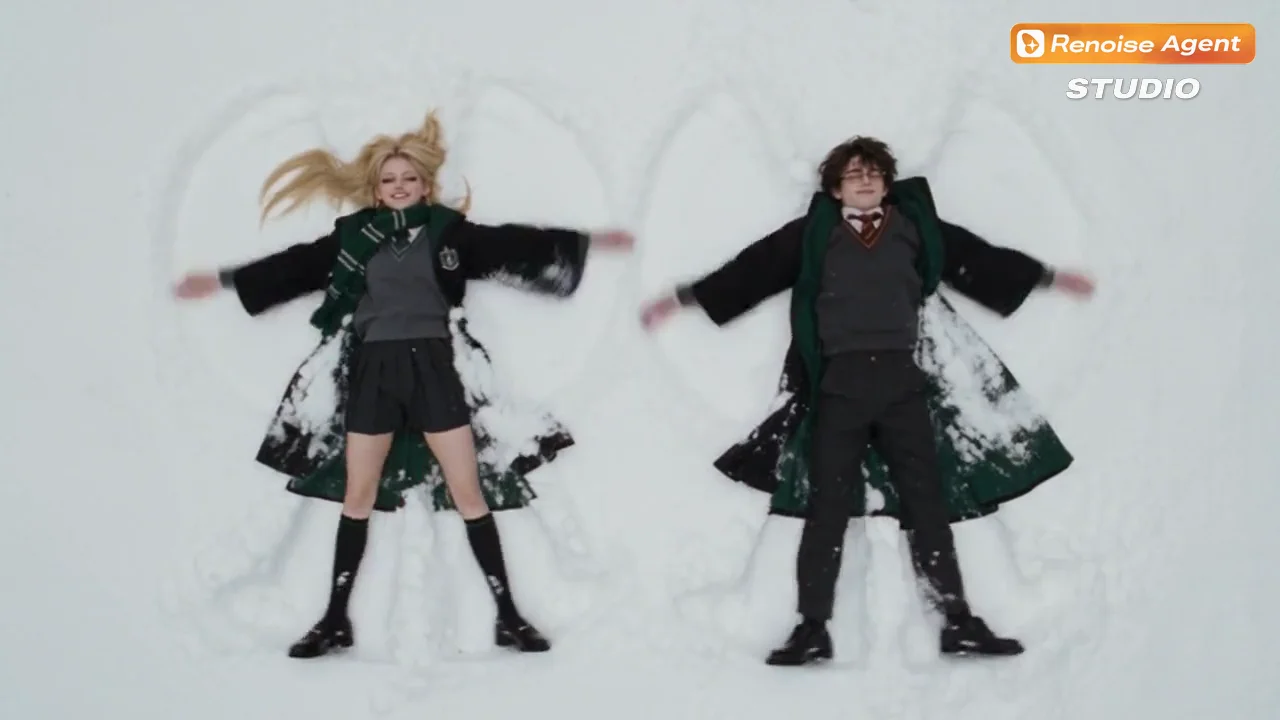
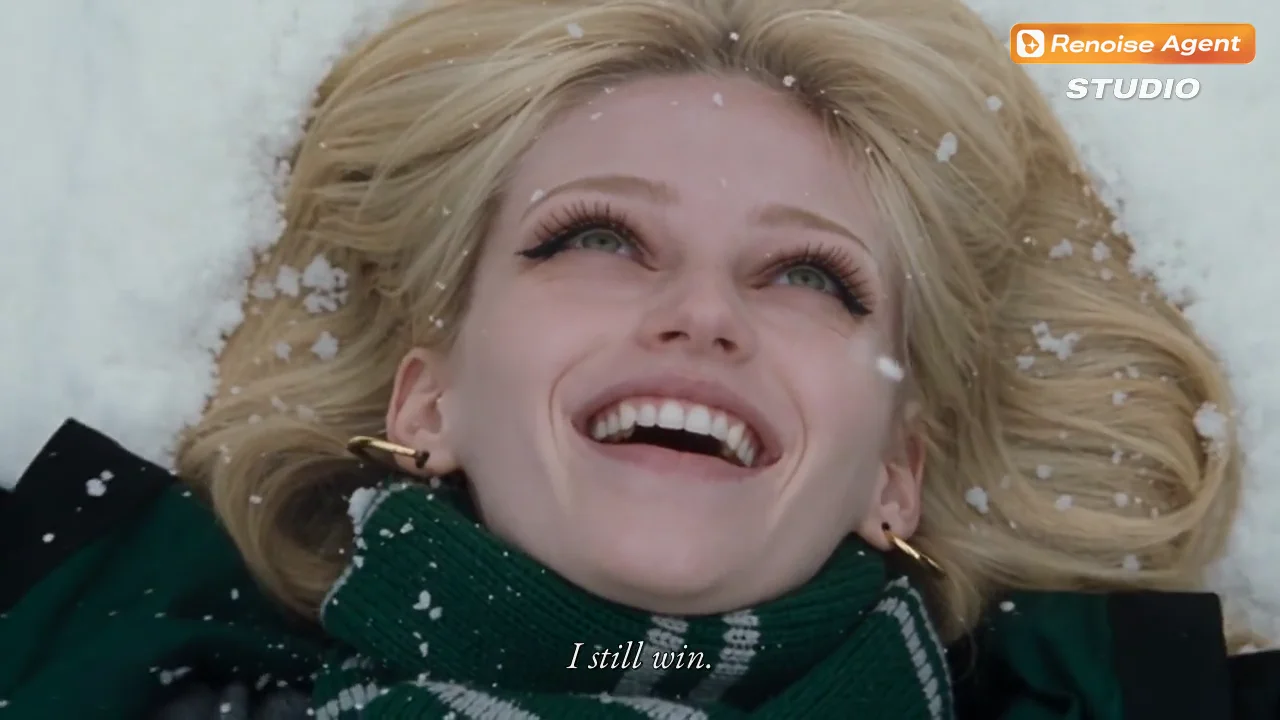
- His snowball lands on her scarf and turns into a small heart. They lie down and make snow angels. "I still win."
The format: SNOWBALL, 1 minute, 16:9, English dialogue. Notice what the story does in 60 seconds: a boast, a public embarrassment, a reversal and a last line that keeps her pride intact. That is the same shape as a short-drama episode. If you have no idea of your own, ask the Agent for four.
Step 3: Write the video prompts
The film is two segments of 30 seconds. Both use the same settings: attach the two character sheets, labelled @Her and @Him, then Seedance 2.5, 30 seconds, 16:9, sound on.
Each prompt is built from the same blocks, and they are worth copying even if you change everything else:
- STYLE BIBLE: the look, lens, light and editing pace, identical in every segment so the two halves cut together.
- NEGATIVE: what the model drifts into, including other languages, a cartoon look and characters lined up facing the camera.
- LANGUAGE: every line in English, word for word, never translated.
- CHARACTERS and OUTFITS: who
@Herand@Himare, and exactly what they wear in this film. - CAMERA RULE: whose story it is. Here close-ups are only of her, and his face is never shown.
- SETTING: the place, and the one piece of magic, described once.
- TIMELINE: the 30 seconds in five-second beats, each with its shots, its line of dialogue and its sound.
- REALISM LOCK: no identity drift, diegetic sound only, no music, no subtitles. Music and subtitles come in step 4.
Segment 1: the heart snowballs
Segment 2: the snow angels
Same references and settings as segment 1. The style bible, negative, characters, outfits, camera rule and setting are copied unchanged; only the timeline is new. That repetition is what makes the two halves cut together.
Step 4: Score it and cut the film
The video prompts ask for diegetic sound only: footsteps, laughter, the whoosh of a snowball. The music is made separately with Lyria, timed to the film, so it can run without a break across the cut between the two segments. Then the Agent joins the two segments, mixes in the score and burns in the subtitles.
The music prompt:
Instrumental only, no vocals.
Use: underscore for a 60-second fantasy romantic comedy: in a snowy courtyard snowball fight every snowball she throws at him turns into a pink heart; the whole class sees it; they end up laughing in a snowdrift making snow angels.
Genre/style: sparkling, bouncy winter comedy that turns cozy and romantic.
Mood: playful competitive, comic disbelief, cheeky, then joyful and warm.
Instrumentation: sleigh bells, pizzicato strings, glockenspiel, celesta, flute, a comic tuba, then warm strings and soft choir-like pads (no voices singing words).
Tempo/rhythm: about 112 BPM, sparkly stings at 7s and 12s, a big swell at 22s, slowing to 80 BPM in the final snow-angel moment.
Key: D major.
Target length: about 62 seconds.
Structure:
[0-7s] Playful winter march.
[7-20s] Heart-snowball stings and comic build.
[20-30s] Big sparkly swell.
[30-45s] Cheeky playful theme.
[45-62s] Cozy warm romantic finish.
Production: clean, cinematic, kept light so dialogue stays clear.
Two details make it fit: the stings are placed on the seconds where the snowballs turn into hearts, and the last line asks for a light mix so the dialogue stays clear. More about the model on our Lyria page.
Step 5: Make the cover
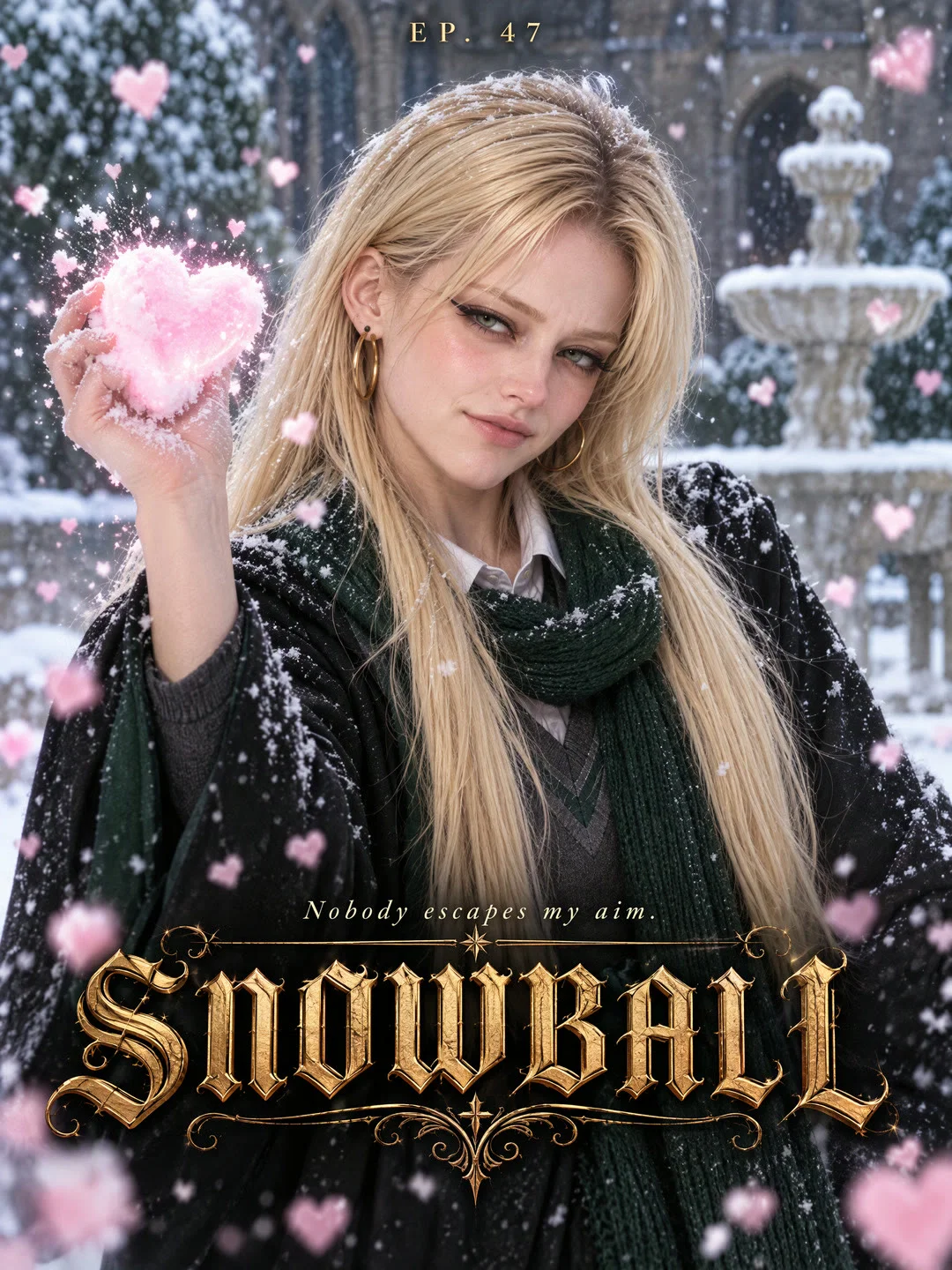
A short drama lives or dies on its thumbnail. The cover prompt takes one frame from the film for the setting, the character sheet for her face and an earlier episode's cover for the title lettering, and asks for a 3:4 poster that stops the scroll.
The cover prompt:
USE: Instagram 3:4 cover poster for episode 47 of a romantic fan film series: a romantic comedy where every snowball she throws at him turns into a pink heart. One bold hero image that stops the scroll.
REFERENCES:
- @Her = HER identity (very long platinum-blonde hair, green eyes, black winged eyeliner, gold hoop earrings).
- @title_style = the episode 1 cover. Match ONLY its title typography style (ornate gold-foil blackletter with engraved flourishes), tagline style and poster finish.
- @episode_frame = a frame from this episode. Match the snowy stone courtyard with the frozen fountain.
She is a young adult about 20, wearing an elegant black wool robe lined in emerald green over a charcoal-grey V-neck sweater, a white open-collar shirt, no tie, and a soft emerald-green knitted scarf.
COMPOSITION (vertical 3:4, eye-level): Waist-up portrait of her in a snowy courtyard, holding up a snowball that glows soft pink and is shaped like a heart, a playful confident grin, rosy natural cheeks, tiny pink heart-shaped snowflakes drifting all around her, platinum hair dusted with snow. Bright white winter daylight, soft blue shadows.
TEXT (designed lettering, part of the artwork):
- Top center, small spaced capitals in thin gold: "EP. 47"
- Small italic tagline in ivory with a soft shadow, above the title: "Nobody escapes my aim."
- Title across the lower third: "SNOWBALL" in large ornate gold-foil blackletter capitals with engraved flourishes, matching @title_style; every letter clean and clearly readable; every capital L has a straight vertical stem and flat foot.
No other text.
STYLE: photorealistic cinematic romantic comedy key art, 50mm, shallow depth of field, fine grain, natural skin texture.
AVOID: low camera angle, raised legs, visible thighs, suggestive pose, unflattering expression, grimace, blotchy red face, any other or misspelled text, illegible letters, house crests or emblems, striped ties, red-and-gold clothing, plastic skin, anime look, cartoon people, extra fingers, watermark.
Turn it into a vertical short-drama series
SNOWBALL is episode 47 of a series, and the cover says so. To make a series for TikTok, Reels or Shorts, keep everything above and change three things:
- Shoot 9:16. Set the ratio in every video prompt and the cover. Vertical framing favours close-ups, which is where short dramas live anyway.
- Give every episode the same shape. Hook, setup, conflict, escalation, reversal, cliffhanger. The hook is the first three seconds and it has to be an event: SNOWBALL opens on "Nobody escapes my aim." The last shot leaves a question the next episode answers.
- Reuse the sheets, the style bible and the outfits. They are what make episode 48 look like episode 47. Only the setting, the timeline and the dialogue change.
A 60–90 second episode usually needs 8 to 12 shots. SNOWBALL fits 10 beats into two 30-second segments, a new shot every 2–4 seconds.
What goes wrong and how to fix it
| Problem | What you see | Fix |
|---|---|---|
| The face changes | The lead looks like a cousin by the second segment | Same character sheet in every segment, under the same label; repeat the identifying details in the CHARACTERS block |
| The wrong language | Lines come out translated or accented | A LANGUAGE block, and "say EXACTLY, word-for-word" before every line |
| Characters pose at the camera | Everyone stands in a row facing the lens | Say so in the style bible and the negative: "Characters face and react to each other" |
| Segments don't cut together | Light, grade or costume jump at the join | Copy the style bible, outfits and setting unchanged into every segment |
| Music fights the dialogue | Lines get buried | No music in the video prompts; score separately and ask for a light mix |
Small details fade first: earrings, glasses, a scarf colour. Put them on the character sheet and repeat them in the shot that needs them.
How much an AI short drama costs
At list prices in Renoise, the two 30-second Seedance 2.5 segments of a film like SNOWBALL cost 960 credits each at 720P, so 1,920 for the picture. The character sheets, the music and the cover come on top and are small next to that.
For a series of one-minute episodes at list prices:
| Setup | One 60-second episode | A 10-episode season |
|---|---|---|
| Seedance 2.5, 720P | 1,920 credits | 19,200 credits |
| Seedance 2.5, 480P | 960 credits | 9,600 credits |
| Seedance 2.5 Flash, 720P | 1,200 credits | 12,000 credits |
| Wan 3.0, 720P | 720 credits | 7,200 credits |
Draft on Flash or at 480P, fix the story and the joins, then render the final cut at 720P. For how credits turn into money, see how much AI video costs.
How to make an AI micro drama
The same way. "Micro drama" and "short drama" name the same format: short vertical episodes that end on a cliffhanger and run as a series. The five steps above apply unchanged.
FAQ
How long should an AI short drama episode be?
60 to 90 seconds works for most vertical platforms: two to four segments, or 8 to 12 shots. SNOWBALL is 60 seconds in two 30-second segments.
Can I use my own characters?
Yes. That is what the Character Short Film skill is for. Upload your character images, label them in the prompts, and the character-sheet step turns them into live-action references.
How do I keep the same face in every episode?
Make the character sheet once and attach it to every segment of every episode under the same label. Repeat the details that drift, like earrings or glasses, in the CHARACTERS block.
Which AI model is best for short dramas?
SNOWBALL used Seedance 2.5: 30-second segments, dialogue and sound in the same pass, and room for many character references. For cheaper drafts, Seedance 2.5 Flash costs 20 credits per second at 720P against 32.
Can one person make a whole season?
Yes. Once the character sheets, style bible and outfits are fixed, each new episode is a new story, timeline and dialogue on top of them. SNOWBALL's cover is billed as episode 47 of its series.