A 2D illustration
Full-resolution PNG or WebP of an original character. Not a .vrm, not a Live2D project, not something you can drop into VTube Studio as-is.
Describe the character and pick a style and framing — the AI VTuber generator draws an original design. You get a 2D illustration, not a rigged model.
Follow us and get 20 free credits — about 5 images
Original characters only — not a likeness of a real person or an existing VTuber.
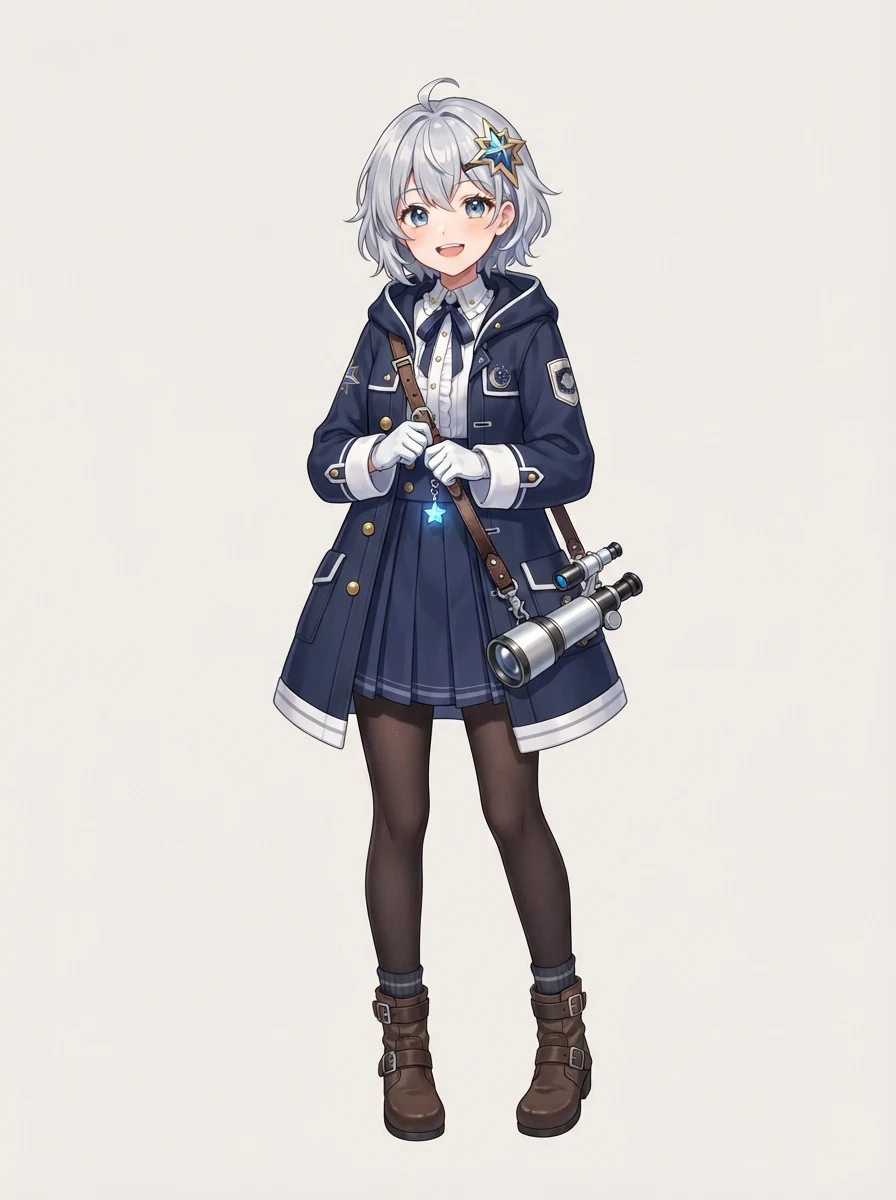
a cheerful astronomer girl, short silver hair with a star-shaped hairpin, navy coat — Anime · Full body
Real model output from the default description on this page — an original character.
Subscribe for more credits and more models.
Describe the character in the box above — archetype, hair, outfit, colours, a prop — then pick an art style and how you want it framed. The model draws an original design in about half a minute. Following us on X and YouTube puts 20 credits on the account and one design costs 4, so the first five are covered. What comes back is a 2D illustration you own the use of; turning it into something that moves when you talk is a separate rigging step, covered below.
Want a character for a story or a game rather than a stream? See the AI character guide
Being precise about the deliverable matters more here than anywhere else on the site — four of the seven tools ranking for this term put "2D & 3D" in their titles.
Full-resolution PNG or WebP of an original character. Not a .vrm, not a Live2D project, not something you can drop into VTube Studio as-is.
Full body for a stream overlay, half body for a profile, or a front/side/back reference sheet to hand to a rigger or an illustrator.
Anime, chibi, semi-realistic or painterly. The style pill and the framing pill compose with whatever you type.
The generator draws; it does not write. The persona section below is a structured way to build the name, backstory and voice yourself.
No account needed to try the controls; sign in when you generate.
Replace the starter description one clause at a time — archetype, hair, outfit, palette, a prop. Specific beats poetic: "brass telescope on a leather strap" lands, "mysterious vibes" does not.
Anime, chibi, semi-realistic or painterly; full body, half body, or the three-view sheet.
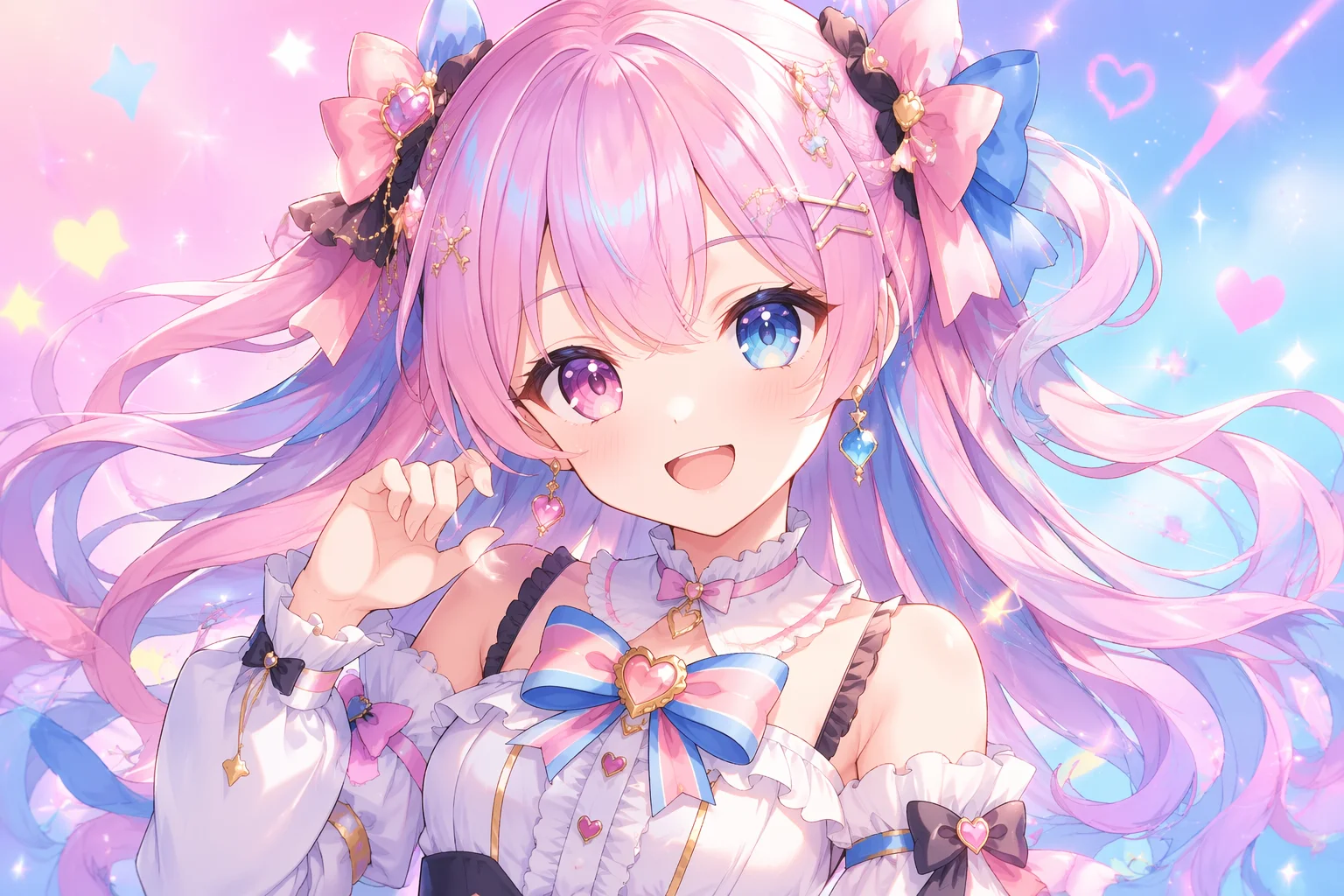
Each design costs 4 credits and the 20 a follow earns cover five. When one is right, save it — the next run will not reproduce it (see below).
This is the first thing to be clear about, because the market is not. Four of the seven tools that rank for "ai vtuber maker" advertise "2D & 3D" in their page titles, and a newcomer reasonably reads that as "I will come out of this with something I can stream with tonight". What this page produces is a high-resolution 2D illustration of an original character. That is a design, and a design is genuinely the hard part — but it is not a rig.
To make it move with your face or voice you need the next two steps, neither of which happens here: the artwork has to be separated into layers (hair, eyes, mouth, brows, body parts on their own planes), and those layers have to be rigged with deformers and physics in something like Live2D Cubism, then loaded into VTube Studio or an equivalent. A flat illustration cannot be rigged without that layer separation, which is why the three-view sheet framing exists on this page: front, side and back on one sheet is exactly the reference an illustrator or rigger asks for when they quote you. Generate the design here, then take the sheet to whoever does the rigging — that is the honest workflow, and it is cheaper than commissioning the design from scratch.
Tested 2026-09-02 on the exact model this page runs, on original characters. One of these results is the reason VTubers specifically should read this table.
| What we tried | Result | What it means for you |
|---|---|---|
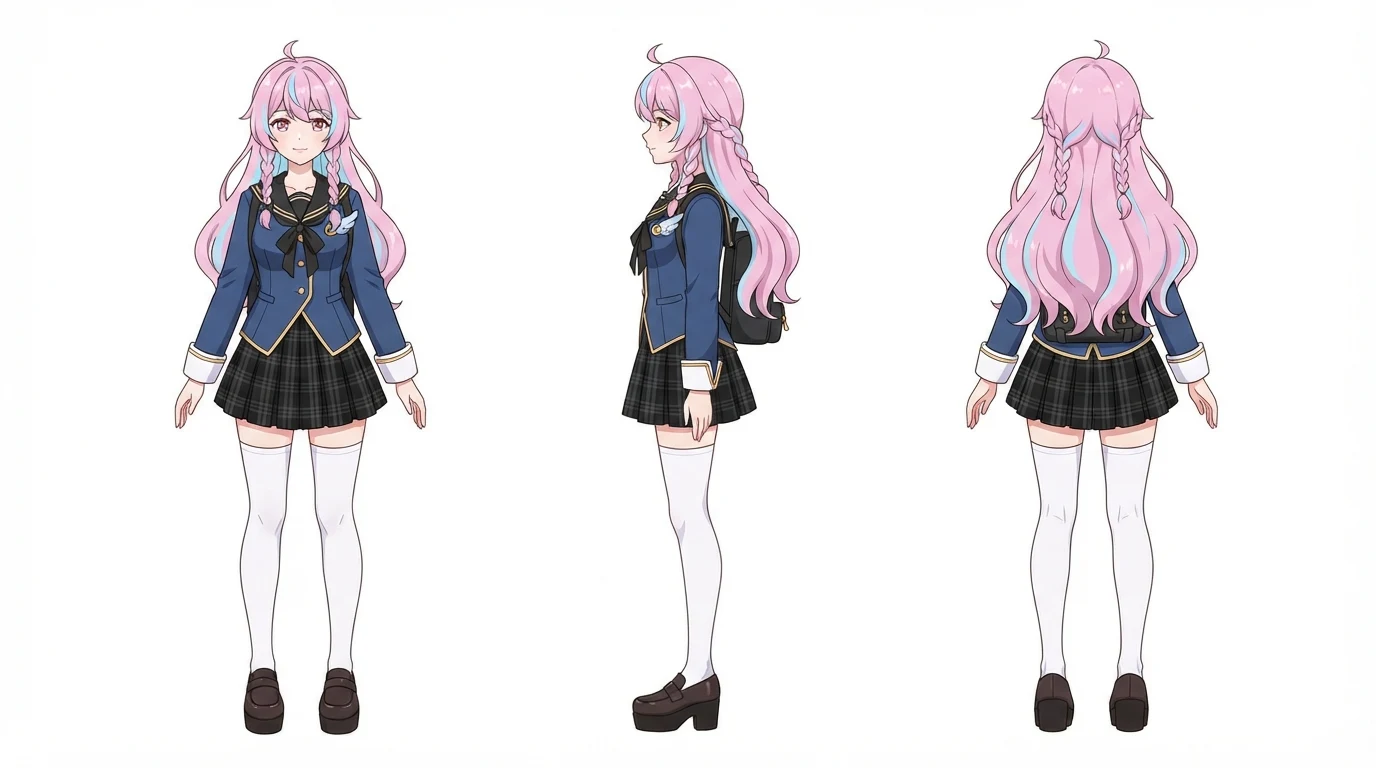
| Three-view sheet — front, side and back on one image | Good, better than we expected | Hair, braids, uniform, plaid skirt, thigh-highs and shoes all matched across the three views. We had this down as the likely failure and it was not |
| ⚠️ Running the same description twice | You get a different character | Long wavy hair vs a short bob; a blue-gold star pin vs a yellow one; a long coat and skirt vs a blazer and shorts. Consistency holds inside one image and breaks between runs |
| Vague description ("mysterious anime girl") | Generic result | The pills only supply style and framing. The character comes from your text, so specific nouns and colours do the work |
| Uploading a photo of yourself to convert | Not supported here | This page is text-to-image — there is no upload. See the section below for where to go instead |
| Asking for an existing VTuber or anime character | ⚠️ It will draw it anyway | We tested this: every run carries an “original character” clause and the model produced a recognisable franchise character regardless. The clause is a request, not a filter — so this line is on you, not on us |
The first two images came from one identical prompt, run twice. This is the single most useful thing to understand before you start.
The default description on this page: silver hair, star hairpin, navy coat, brass telescope. Long wavy hair, a blue-and-gold pin, coat over a skirt.
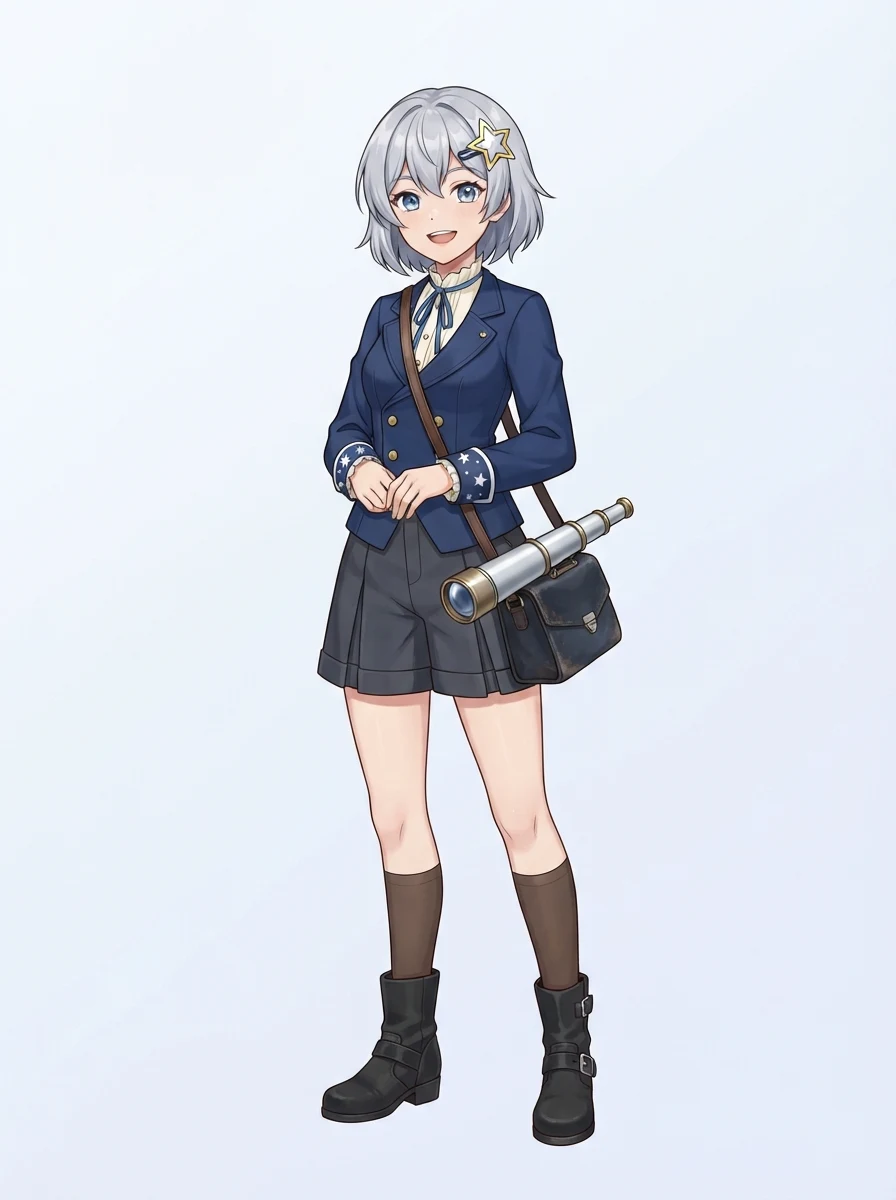
Identical prompt, nothing changed. A short bob, a yellow star pin, a blazer and shorts. Recognisably not the same person. Save the design you like when you get it.
Front, side and back of one character in a single generation — which is why the details match. This is the file to hand to a rigger.
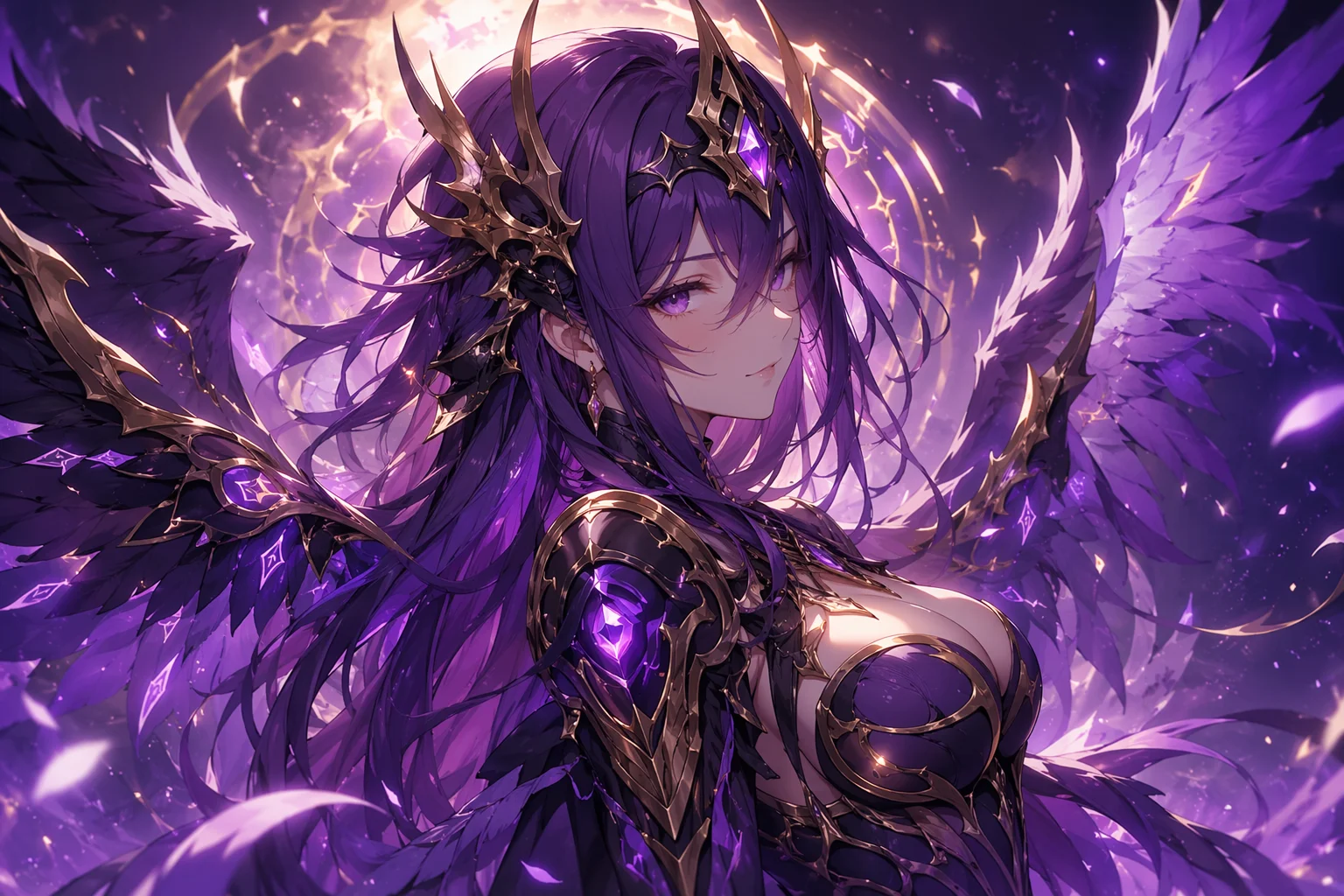
A spread of original VTuber characters, showing how far the art-style pill moves the result.
A design is half a VTuber. The other half is who they are, and this is worth saying plainly: the generator above draws, it does not write. There is no text output on this page, so nothing here will hand you a name, a backstory or a catchphrase. What follows is the method we would use, and it works better than a random generator anyway because the pieces have to fit each other.
Start with the premise in one sentence — not a vibe but a situation: "an astronomer who broadcasts from an observatory that closed down years ago". A premise gives you scenes to stream about; a vibe gives you nothing to say on day four. Then derive the visual hooks from that premise and put them in the description box, because a viewer should be able to guess your premise from your model alone: the closed observatory becomes a dusty coat, a brass telescope, a lantern. Next the name — say it out loud, and check it survives being typed into chat and shouted in a clip title; two or three syllables travels furthest. Then two or three speech habits: something you always say when you open, a word you use wrong on purpose, a thing you refuse to talk about. Habits are what make clips, and clips are what grow a channel. Finally the boundaries — what your character does not know, will not do, and how much of you is in them. Writing that down before you go live is much easier than renegotiating it in front of an audience.
Once the premise is settled, come back and rewrite the description box around it. A design that was derived from a premise reads as a character; a design that was picked because it looked cool needs lore reverse-engineered onto it later, and that is always the weaker direction.
Some people arrive here wanting to turn their own photo into a VTuber rather than describe a character from scratch. This page cannot do that — it is text-to-image and has no upload. Being direct about it saves you the round trip.
What works instead: run your photo through the photo-to-cartoon tool to get an illustrated version of yourself, then bring that result and a description into the image workspace to push it toward a VTuber look. It is two steps rather than one, but it keeps your actual face as the starting point, which is the thing you came for. If instead you want an original character that merely resembles the vibe you are after, describing it here is faster and gives you a design that is unambiguously yours.
This page runs the fast tier on purpose. Nano Banana 2 Lite costs 4 credits a design, which is what makes "the 20 credits a follow earns cover five" a sentence we can keep — and five designs is roughly what it takes to find a direction you actually like. Iterating cheaply is the right shape for character design.
When you have a direction and want to push one design further, open the full image workspace: every model on the platform is available there, including Nano Banana Pro, and you keep working on one canvas instead of re-prompting from zero. That is also where to go for a bigger canvas, a different aspect ratio, or to build out a set of expressions around a design you have settled on. If you want the character to move, the video models take a still as their opening frame.
What happens to what you generate here.
Picking a file only previews it on your device. Not one byte is stored until you sign in and click generate.
Uploads land in your private library, never a public gallery, and re-running the same design stores nothing new.
Remove uploads and results from your library whenever you want.
Credits work across every tool — image editing, upscaling and the video models.
For first-time AI content creators
Billed $168 annually
Upgrade PlanSave $72/year
For creators shipping content every week.
Billed $504 annually
Upgrade PlanSave $216/year
For studios and pros producing at commercial scale.
Billed $1680 annually
Upgrade PlanSave $720/year
For first-time AI content creators
Billed monthly
Upgrade PlanFor creators shipping content every week.
Billed monthly
Upgrade PlanFor studios and pros producing at commercial scale.
Billed monthly
Upgrade PlanRenews automatically each year until canceled.
Renews automatically each month until canceled.
Generate the three-view sheet, refine a frame on the canvas, or start on expressions.
No. You get a 2D illustration at full resolution. To stream with it, the artwork has to be split into layers and rigged in something like Live2D Cubism, then loaded into VTube Studio. That is a separate step and a separate skill — which is exactly why this page offers a front/side/back reference sheet: it is the file a rigger asks for when they quote you.
No, and we would rather say so than imply otherwise. This tool has one output and it is an image; there is no text generation on this page. The persona section above is a written method for building the premise, name, speech habits and boundaries yourself — the pieces have to fit each other, which is something a random generator cannot do for you.
No — and this is the most important thing to know before you start. We ran one identical description twice and got two different characters: long wavy hair versus a short bob, a different hairpin, a coat and skirt versus a blazer and shorts. Consistency holds within a single image, which is why the three-view sheet works, but it does not carry across runs. Save the design the moment you like it.
Following us on X and YouTube puts 20 credits on the account and one design costs 4 credits, so five are covered. We would rather give you the arithmetic than the word "free" — the credits are shared across every tool here, so those 20 could equally go to upscaling or video.
Not on this page — it is text-to-image and has no upload. The workable route is to run your photo through the photo-to-cartoon tool first, then take that result into the image workspace with a description to push it toward a VTuber look.
Nano Banana 2 Lite, from Google. It is the fast tier, chosen so one design costs 4 credits and the free credits stretch to five. Every image on this page is real output from it.
Physically, yes — and we would rather you heard that from us than found out. We tested it: with the “original character” clause present in every prompt, naming a well-known franchise character still returned a recognisable version of them. That clause is a request to the model, not a filter, and we are not going to pretend otherwise. What it does help with is keeping a vague description from drifting into someone else’s design. So the boundary is yours to hold: do not generate real people, and do not generate characters you do not own. A channel built on someone else’s design is not a channel you own either.
The designs are yours to use, including on a channel. Watermark-free exports come with a paid plan. Because the model draws from a description rather than from a reference image, an original description gives you an original design — but if you are about to put it on merch, it is worth a reverse-image check first, as with any generated art.
They overlap and the difference is what you need it for. This page is aimed at streaming: full body and half body framings that suit an overlay, a three-view sheet for rigging, and a persona method built around going live. The character generator is aimed at fiction and games — designing to a spec you already have, for a story rather than a stream.